
What Makes a Whole Home Renovation Feel Timeless

Updated: May 24
Can a renovation actually feel timeless, or does everything eventually look dated?
How do I choose materials that hold up with kids, dogs, and real life?
What does a good contractor actually do during a whole home remodel?
When should I play it safe with finishes, and when can I go bold?
Why is a whole home renovation so much more complex than a single-room project?
How do I avoid making decisions I'll regret in five years?
TL;DR: A timeless whole home renovation comes down to two things working together: materials chosen for your actual life, and design choices that have a clear logic to them. The right contractor doesn't just manage the build. They help you think through decisions you didn't even know you needed to make.
The Real Question Isn't "Will I Love It Now?" It's "Will I Love It in Ten Years?"
Most people come into a renovation thinking about what they want the space to look like when it's done. That's understandable. But the renovations that hold up, the ones that still feel right a decade later, were planned with a slightly different question in mind.
Not just does this look good, but how will this hold up for how we actually live?
That distinction is the difference between a renovation that feels timeless and one that quietly starts to feel off after a few years. That distinction is also something a lot of contractors won't walk you through, because it requires a level of investment in your specific situation that takes more time than just picking finishes from a catalog.
The Myth That Keeps People From Starting
Here's what we hear a lot when someone first reaches out about a whole home renovation: "I want to do it, I'm just not sure I'm ready for how overwhelming it's going to be."
That's a real concern and it's worth taking seriously. A whole home remodel does involve a lot of decisions. You're not just picking a paint color, but you're also making choices about flooring, cabinetry, countertops, tile, fixtures, trim, lighting, flow between spaces, and how all of those things relate to each other across every room in the house. We know it can be a lot!
What usually happens when someone is making those decisions alone, without someone helping them see the full picture, is the decisions fatigue creeps in and then the project starts to feel like a drag.
What we've found, working through projects like this in the Cedar Valley, is that most clients don't hate the process. They actually enjoy it once they understand what's being asked of them and why. The decisions stop feeling arbitrary when someone walks you through the reasoning behind them.
That's what a real building partner does. It's not just project management. It's helping you think clearly about choices that will affect your daily life for a long time.
What a Whole Home Renovation Actually Involves
A single-room remodel has a kind of natural boundary to it. You make decisions for that room, you execute, you're done. A whole home renovation is different because every room affects the others.
The flooring you choose in the entry has to make sense in the hallway, which has to make sense in the living room. The kitchen hardware has to feel related to the fixtures in the bathrooms. The color story has to move through the house in a way that feels intentional rather than random.
When you're managing all of that across an entire home, the complexity compounds quickly. There are more contractors to coordinate, more schedules to manage, more places where a decision made in week two affects something that won't get built until week eight.
This is why who you build with matters as much as what you build. The complexity of a whole home project requires someone who can hold all of it in their head at once, flag the conflicts before they become problems, and make sure the decisions you're making early on don't create regrets later.

How to Pick Materials That Will Still Feel Right in 2035
This is where a lot of renovation decisions go sideways. Someone falls in love with a trending material or finish, installs it everywhere, and three years later it feels like a timestamp rather than a home.
Timeless material selection isn't about being boring. It's about knowing what role each material is playing in the space and choosing accordingly.
There are two categories worth thinking about separately: foundational materials and feature materials.
Foundational Materials
Foundational materials are the things that cover the most square footage and are the most expensive and disruptive to change. Flooring, cabinetry, large-format tile, countertops. These are the places where you want to lean toward materials that have proven staying power, things that have looked good for decades and will continue to. White oak hardwood, natural stone, simple shaker cabinetry. These aren't boring choices, but in the right home, it's a very smart choice!
Feature Materials
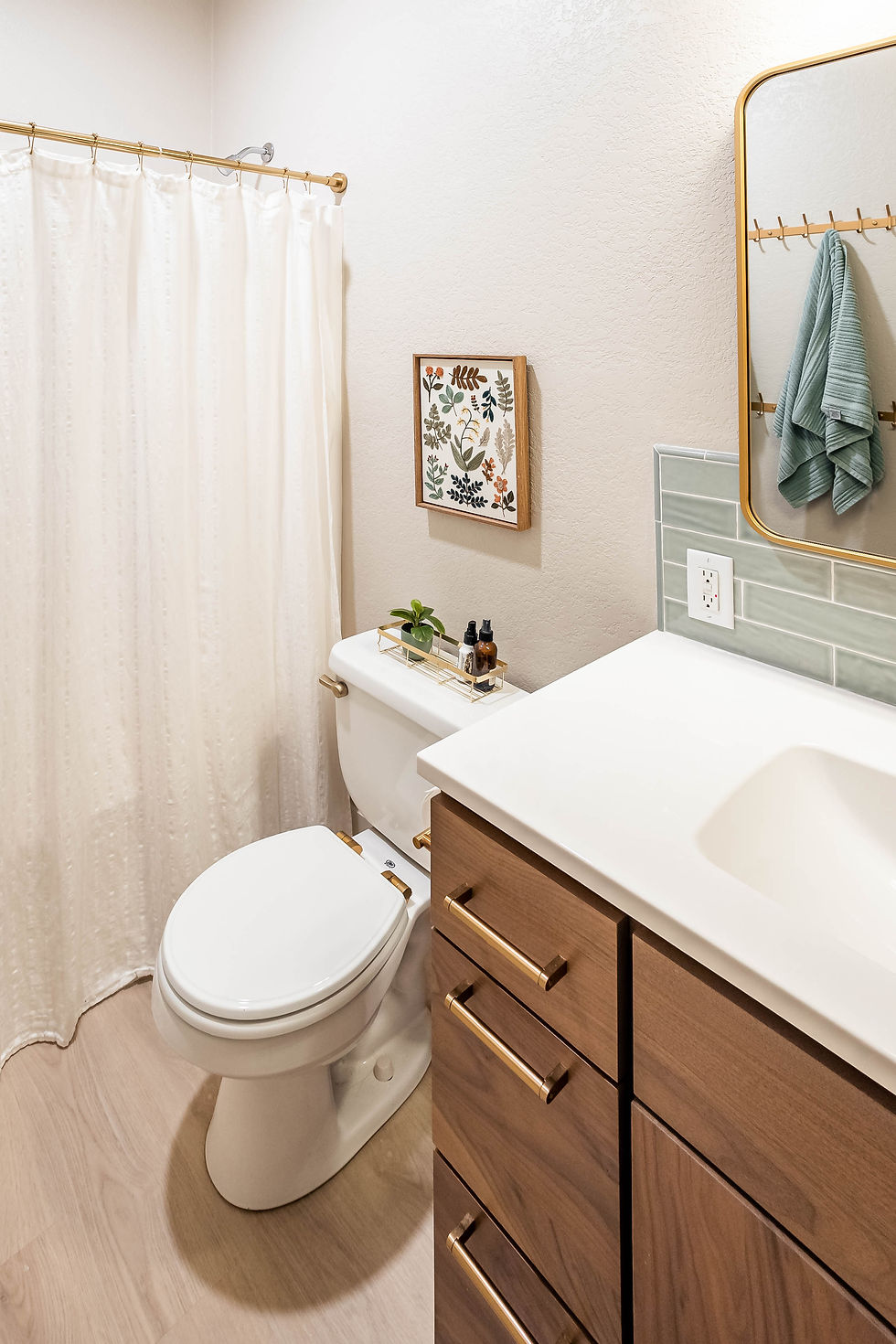
Feature materials are where you have real room to play. A bold backsplash tile. A deeply saturated paint color in a bedroom or study. Patterned tile in a mudroom or powder bath. Interesting hardware. These are the places where personality lives, and because they're smaller in scale and less expensive to change, you have more creative freedom.
The mistake most people make is treating every decision with the same level of caution. They either go safe everywhere and end up with a space that feels flat, or they go bold everywhere and end up with a space that feels chaotic. The goal is a clear hierarchy.

Designing for Real Life, Not Just Resale
One of the most useful conversations we have with renovation clients early on is about how they actually use their home. Not how they'd like to use it in theory. How they actually live in it.
Do you have dogs that come in muddy from the backyard? Then a light-colored natural stone floor in the entry, as gorgeous as it might look, is going to be a source of frustration rather than joy. A larger format porcelain tile in a warmer tone is going to perform better and still look great.
Do you have young kids? Then your choice of cabinetry finish, countertop material, and upholstery fabric matters in a practical way, not just an aesthetic one. There are beautiful materials that are also genuinely durable. The key is knowing which ones they are.
This isn't about designing a home for whoever buys it someday. It's about designing a home that serves the people who live in it now, in a way that also happens to hold its value.
The Color Question: When to Go Neutral and When to Commit
Color is where people get most anxious during a renovation, and it's understandable. Color feels permanent in a way that's hard to shake, even when you know intellectually that paint is the most changeable thing in a house.
Here's a useful framework. The larger and more structural the surface, the more you want to think long-term. Wall color in a main living area, large tile selections, cabinetry paint or stain, these are the places where a strong classic or a rich, time-tested neutral tends to serve people better than whatever is trending on design websites right now.
But the smaller and more contained the surface, the more room you have to be bold and specific. An accent wall in a reading nook. The inside of a built-in bookcase. A statement tile in a guest bath. These are places where a more daring choice actually reads as intentional rather than risky.
The rooms people tend to love most long-term are the ones where there's a clear logic to how color moves through the space. Not necessarily safe, but coherent. You can feel the thought behind it.
Why Working With the Right Contractor Changes Everything
A renovation like this, done well, is a collaboration. You bring the vision of how you want to live. Your contractor brings the experience to translate that vision into decisions that actually work in practice, and the expertise to flag the things you wouldn't know to think about.
The Big Woods process for whole home renovations is built around that partnership. We get into the details early, before anything gets built, because the decisions made in the planning phase are the ones that determine whether the finished home feels like it was designed with intention or just assembled piece by piece.
If you've been putting off a renovation because it feels like too much to take on, that's a fair instinct. It is a lot. But the answer isn't to wait until it feels less complicated. The answer is to work with someone who has done it enough times to make it feel manageable.
Frequently Asked Questions
How long does a whole home renovation take? It depends on the scope, but a true whole home renovation typically runs anywhere from four to six month once construction begins. The planning and design phase, which is where a lot of the important work happens, comes before that. Trying to rush the planning phase is one of the most common ways projects run into trouble later.
How much does a whole home renovation cost in Iowa? There's no honest single-number answer to this, because the cost is driven almost entirely by your specific choices — the finishes you select, the structural changes involved, and the size of the home. What we can tell you is that a well-planned renovation with clear priorities tends to stay on budget much more reliably than one where the decisions get made on the fly. We talk through cost drivers in detail with every client early in the process.
Is it better to renovate or build new? That depends on the bones of your existing home and what you're trying to accomplish. If the structure is solid and the layout is close to what you want, renovation is often the more cost-effective path and lets you keep things like established landscaping, a neighborhood you love, and square footage you'd pay more to rebuild from scratch. If the layout needs a complete overhaul or the structure has significant issues, new construction might make more sense. We're happy to talk through that question honestly for your specific situation.
What should I look for in a contractor for a whole home renovation? Experience with projects of similar scale matters a lot. So does communication. A whole home renovation involves hundreds of decisions over many months, and you want a contractor who is proactive about keeping you informed and involved, not one you have to chase down for updates. Ask for references from clients who have done projects of similar scope, and ask those clients specifically about the process, not just the outcome.
How do I choose finishes that won't look dated? Focus your most durable, expensive materials on surfaces with the most square footage, and let yourself be bolder with smaller, more contained design moments. Think about the materials that have looked good for the last thirty years — not the last three. And design for how you actually live, not for a hypothetical future buyer.
Big Woods Construction builds custom homes and whole home renovations in the Cedar Falls and Waterloo, Iowa area.
BUILD. REMARKABLE.


Comments